The Holy Waiting Room: The Capacity to Not Know
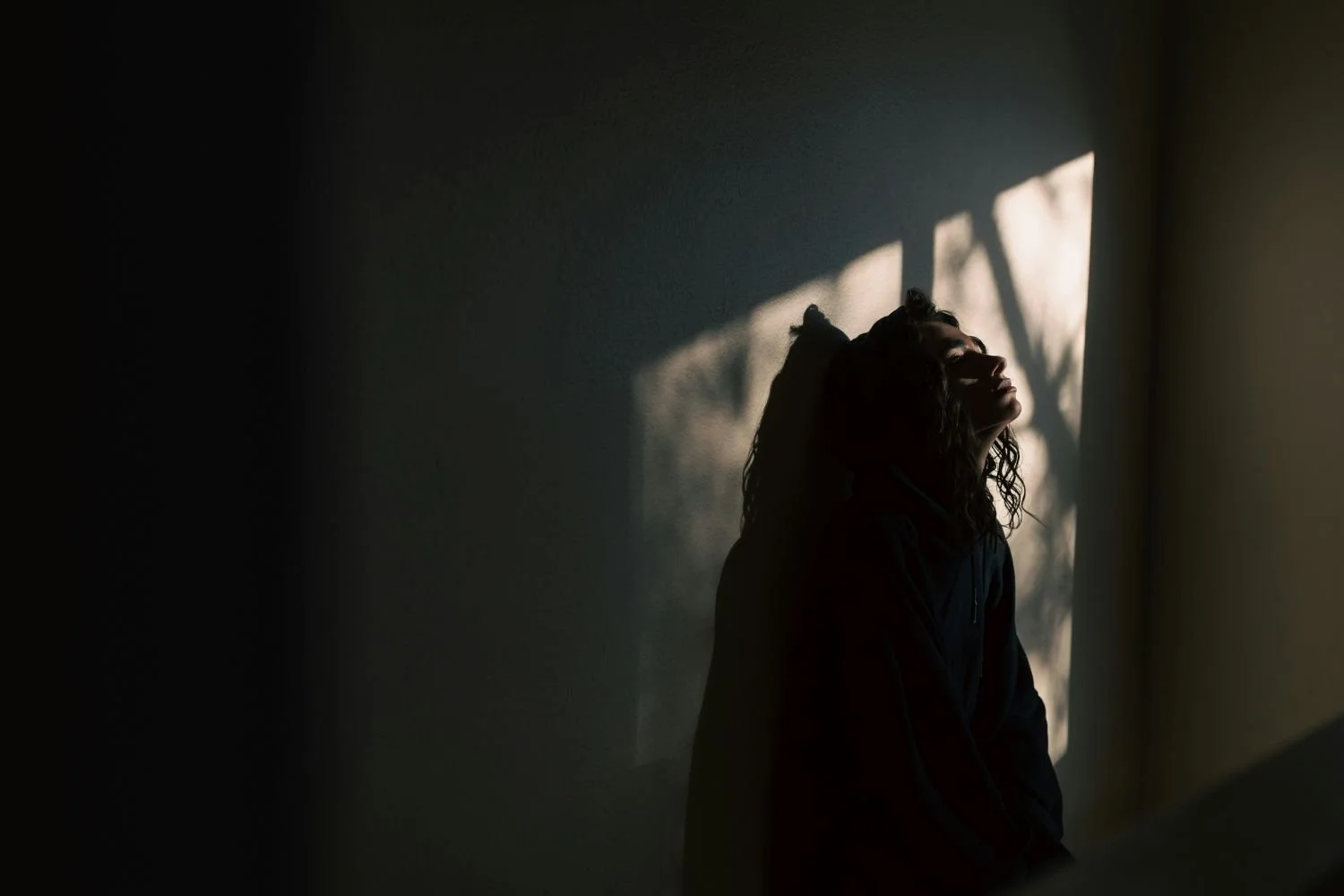
There is a particular kind of discomfort that comes with not knowing. You have done what you can. You have made the decision, sent the message, applied for the opportunity, had the conversation, started the process. And now there is nothing left to do except wait. The answer has not arrived. The situation has not resolved. The next step is still unclear.
Welcome to the waiting room.
Most of us are remarkably uncomfortable here. We are used to movement. We solve, decide, plan, optimise and move forward. When something becomes uncertain, the instinct is often to do something to make the uncertainty disappear. But what if the ability to remain in uncertainty without immediately trying to resolve it is a capacity worth developing?
Waiting is not the same as doing nothing
Being in a waiting room does not mean handing your life over to someone or something else. You can still take responsibility for your life while accepting that the outcome is currently outside your control.
There is a significant difference between “I am waiting because there is nothing I can do” and “I have done what is mine to do, and now I am allowing the situation to unfold.” The second requires a different kind of strength. You still move. You take care of your body. You work on what is yours to work on. You create, connect, rest, learn and take the next small step. You simply stop trying to force the thing you cannot currently control.
That distinction matters because the waiting room is not necessarily a place of inactivity. It can be a place of preparation.
Sometimes the work is happening in you
One of the most interesting ways to look at waiting is through the idea of capacity. There are things we want to receive in life that require us to develop the capacity to hold them. It is one thing to receive something. It is another thing to sustain it.
A new relationship, a larger responsibility, more visibility, more money, more freedom, more love, more creative expression. The external thing may be available, but our ability to hold and sustain it can be a different matter.
This is where I find the idea of the vessel useful. Sometimes the waiting period is where the vessel is being built. We develop the capacity to receive, the capacity to hold and the capacity to stay grounded when something actually arrives. Seen from this perspective, waiting can become developmental rather than passive.
The question changes from “Why isn't it here yet?” to “What might be growing in me while I wait?”
Our relationship with uncertainty matters
Uncertainty can activate a powerful desire for control. When we do not know what is going to happen, we may start looking for more information, more reassurance, more signs or more ways to influence the outcome. The mind wants something solid to hold onto.
This is understandable. But there is a point where the search for certainty becomes its own source of exhaustion. We can spend enormous amounts of energy trying to solve something that simply cannot be solved yet.
This is where the capacity to not know becomes interesting. Can you remain present without having the answer? Can you stay connected to yourself without knowing what someone else will decide? Can you continue living while something important remains unresolved? Can you allow uncertainty to exist without turning it into an emergency?
These are forms of capacity too.
The waiting room reveals what we usually avoid
Waiting has a way of bringing our internal patterns to the surface. Impatience, anxiety, the need for control, fear of failure, fear of disappointing others, the urge to overwork or overthink. When there is no external action left to take, we can suddenly become much more aware of what is happening internally.
That makes the waiting room a powerful place for self-observation.
Instead of immediately asking, “How do I make this happen?” we can ask, “What is actually happening in me right now?”
That shift creates space. And space gives us the opportunity to respond differently.
Build capacity while you wait
There are simple ways to make a waiting period constructive. Take care of the body. Eat well, sleep, move, get daylight and give your nervous system the conditions it needs to process what you are experiencing. Create without needing to produce. Write, paint, dance, sing, make something, play. Let your life force circulate without requiring it to become an achievement.
Spend time in nature. Talk to people with whom you do not have to perform or have all the answers. Practise stillness. Journal. Meditate. Sit with a question without immediately trying to solve it.
And perhaps most importantly, continue doing the things that are yours to do. You can love. You can create. You can connect. You can take care of yourself. You can take one foot in front of the other. You can live.
You simply do not have to force the outcome.
Hold it
There is another capacity I think is particularly relevant here: the capacity to hold. To feel desire without immediately needing to consume it. To see an opportunity without having to grab it. To have a vision without forcing the timing. To know that something matters to you without demanding immediate evidence that it will happen.
Holding requires a certain tolerance for incompleteness. And that tolerance can become incredibly valuable because life rarely gives us complete information before we have to take the next step.
Sometimes we have to move with what we know while remaining open to what we do not.
Certainty beyond logic
There is a related idea from Kabbalah that I find fascinating: certainty beyond logic, as taught by Kabbalah teacher David Ghiyam.
The distinction is subtle. Logic often says, “I believe it when I can see the evidence.” Certainty beyond logic says, “I can remain connected to what I know before I can prove it.”
That does not mean ignoring facts or abandoning critical thinking. It means refusing to let the absence of current evidence automatically define the limits of what is possible.
This creates an interesting pairing. Hold it asks you not to force what has not yet arrived. Certainty beyond logic asks you not to abandon what you know simply because you cannot see the evidence yet.
Together, they create a different way of moving through uncertainty.
You do not need to know exactly how. You do not need to make it happen. You do not need to see the whole path. You can keep taking the steps that are yours to take while remaining open to what is still unfolding.
Perhaps the waiting room is part of the journey
Some waiting rooms last minutes. Others last months or years. Being sick can put us in one. A career transition can put us in one. A relationship can put us in one. A creative project, a business, a decision or a period of profound personal change can all create the same experience.
And sometimes the waiting room becomes the place where something fundamental changes. I experienced this myself during burnout. At the time, I simply knew that something could not continue as it had been. Looking back, I can see that the period forced a reset and created space for something new.
We often talk about “coming back” after difficult periods. But perhaps we are not coming back. Perhaps we are moving forward into something we could not have become without the waiting room. That is what makes the room holy.
Not because waiting is inherently pleasant. Not because uncertainty is easy. But because something can be happening there that cannot happen at the same speed when everything is moving. The waiting room gives us time to build capacity, develop awareness, release old patterns and become capable of holding what comes next.
Perhaps the room is not empty at all.
Something may already be happening.
And maybe the practice is learning to stay long enough to discover what it is. 💎